
How long can a dog stay home alone depends mostly on age and health, but the general rule is no more than four to six hours for a healthy adult dog, and far less for puppies and seniors.
Most of us can’t be home all day. Between work, errands, and life in general, dogs spend hours on their own. The good news: with the right routine, most dogs handle alone time fine. The goal of this guide is to give you honest, age-by-age numbers, plus practical options when your day runs longer than your dog’s bladder.
What’s the General Time Limit for a Dog Alone?
A healthy, house-trained adult dog can usually be left alone for four to six hours, and many adapt to eight when their needs are met first.
Veterinary and welfare sources land in a tight range here. According to Southborough Veterinary Hospital, The average amount of time that an adult dog can spend alone safely each day is between four and six hours. Many dogs adapt well to being left home alone for eight to nine hours while their owners are at work, provided that they have sufficient room to move around in comfort.
The key word is adapt. Eight hours works only when exercise, food, water, and a recent potty break are already handled. These numbers are ceilings, not daily goals. Less time alone is always better for your dog’s comfort.
How Long Can a Dog Stay Home Alone by Age?
Alone-time limits change a lot across a dog’s life. Puppies need the most frequent breaks, adults the most flexibility, and seniors often slide back toward shorter windows.
Here is a quick life-stage breakdown:
| Life Stage | Typical Safe Alone Time | Why |
|---|---|---|
| Puppy under 10 weeks | About 1 hour | Tiny bladder, needs constant care and feeding |
| Puppy 3–6 months | 1 hour per month of age | Bladder control builds gradually with age |
| Adult dog (1–7 yrs) | 4–6 hours, up to 8 if prepared | Can hold the bathroom longer, calmer routine |
| Senior dog | 2–4 hours | More frequent bathroom needs, possible health issues |
How Long Can a Puppy Be Left Alone?
A puppy can usually be left alone for about one hour per month of age, and never longer than the time they can hold their bladder.
The American Kennel Club notes that once a puppy reaches three months, they may be able to be left alone for one hour per month of age (up to eight to 10 hours max for adult dogs). So a three-month-old maxes out around three hours, a four-month-old around four. New puppies up to 10 weeks old typically can’t hold their bladder for more than an hour.
Pushing past these windows risks accidents and discomfort, not stubbornness. Build alone time up slowly rather than expecting a full workday on day one.
How Long Can a Senior Dog Be Left Alone?
Senior dogs generally do best with two to four hours alone, since aging often brings more frequent bathroom needs and medical considerations.
As Kinship notes, puppies and senior dogs may require more frequent attention and breaks than healthy adults. Older dogs may have arthritis, reduced bladder control, or conditions that need monitoring. Many simply can’t wait as long as they did in their prime. If your senior is on medication or has mobility issues, shorter windows and a mid-day check-in matter even more.
What Affects How Long a Dog Can Be Alone?
Age is the biggest factor, but health, temperament, training, and breed all shift the safe limit up or down.
The main variables:
- Bathroom needs. An adult dog can typically wait six to eight hours between outside bathroom trips, and for puppies this time frame can be as short as one to two hours.
- Temperament. Anxious or high-energy dogs struggle more with solitude than laid-back ones.
- Breed and energy level. Some working dogs like Belgian Malinois or border collies need jobs to do, and when left alone for long periods can become destructive.
- Training and routine. A dog used to a steady schedule copes far better than one facing a sudden change.
- House setup. Room to move, water access, and a safe space all extend comfortable alone time.
What Happens If a Dog Is Left Alone Too Long?
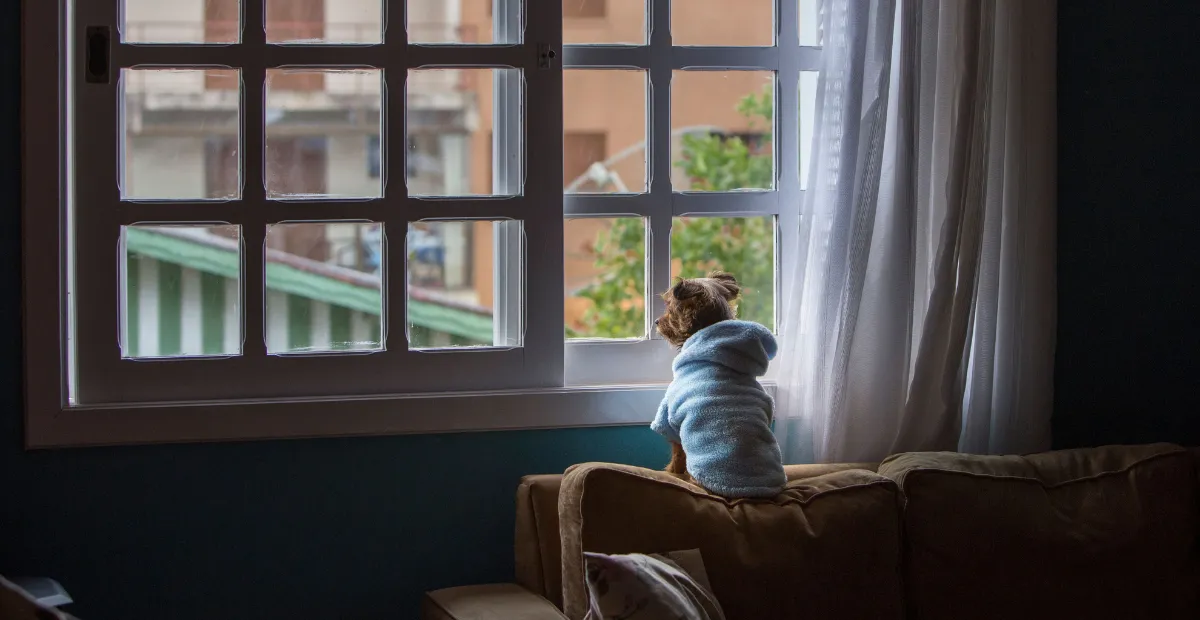
Too much alone time can lead to house accidents, health issues from holding urine, and stress-driven behaviors like barking or chewing.
As veterinarians cited by Newsweek point out, leaving a dog alone at any age risks accidents in the house or urinary tract infections from holding urine in for too long. Beyond the physical, dogs are social animals. Long, repeated stretches of isolation can fuel separation anxiety, destructive behavior, and a generally unsettled dog.
At Barkingham Place, we’ve watched this pattern reverse in real time. Dogs that arrive with restless, pent-up energy often settle into a calmer routine after regular daycare, simply because their days include movement, company, and stimulation instead of long empty hours.
Is It Illegal to Leave a Dog Home Alone Too Long?
In most places there’s no specific legal time limit, but extreme neglect, such as leaving a dog without food, water, or care, can break animal welfare laws.
In most areas, there isn’t a specific legal limit on how long a dog can be left home alone, however extreme cases like leaving a dog without food, water, or care for extended periods can fall under animal neglect laws and result in fines or even jail time. For typical owners with a long workday, the concern is comfort and welfare, not legality. Still, the welfare standard is a good north star: meet the dog’s needs, every day.
How to Help Your Dog When You’re Away
Set your dog up to succeed with exercise before you leave, a comfortable space, and a way to break up the longest days.
Practical steps that work:
- Exercise your dog before you go so they’re ready to rest, not roam.
- Always offer a bathroom break right before leaving.
- Leave fresh water and a safe, comfortable area to settle in.
- Provide a puzzle toy or chew to ease boredom.
- For longer absences, arrange a mid-day option. Dog walkers, neighbours, family, sitters, or daycare can break up long days and give toilet breaks, especially for puppies and seniors.
If your workday regularly runs eight, nine, or ten hours, no single tip closes that gap on its own. That’s where a daytime solution earns its keep.
When Daycare Makes Sense for Busy Austin Owners
Daycare makes sense when your day routinely outlasts your dog’s comfortable alone-time window, especially for puppies, seniors, and social dogs.
If you’re commuting across Austin or pulling full days at the office, the math often doesn’t work in your dog’s favor. A puppy who maxes out at three hours, or a senior who needs a mid-day break, simply isn’t built for a nine-hour stretch alone.
Doggy daycare turns those empty hours into supervised play, socialization, and rest. At Barkingham Place in South Austin, dogs roam a home-like environment instead of sitting in a crate, with someone present at all times and photo updates so you can check in during your day. After 8+ years caring for Austin dogs, we’ve seen how much steadier dogs become when long solo days are replaced with structure and company.
It isn’t right for every dog, and that’s worth saying plainly. Some dogs genuinely prefer quiet time at home. A short, no-commitment visit is the honest way to find out which camp yours falls into.
Frequently Asked Questions
How long can a dog stay home alone during a workday?
A healthy adult dog can usually manage a standard workday of up to eight hours if they’re exercised, fed, and given a bathroom break first. Puppies and seniors typically cannot, and do better with a mid-day walk, sitter, or daycare.
Can a dog be left alone for 10 hours?
Ten hours is longer than most dogs should be left regularly. After 6 months, dogs can usually hold their bladder for up to six hours, and even adult dogs shouldn’t be home alone for much longer than six to eight hours without a break. For ten-hour days, arrange a walker or daycare.
How long can a puppy be left alone?
Roughly one hour per month of age, up to a maximum of about six hours once they’re older. A three-month-old puppy should not be alone for more than about three hours.
Do dogs get sad or lonely when left alone?
Yes, dogs are social animals and can experience boredom, stress, and separation anxiety when alone too long or too often. Exercise, enrichment, and breaking up long days all help.
Is it cruel to leave a dog alone for 8 hours?
Not necessarily, if the dog is a healthy adult whose needs are met and who has space to settle. It becomes a welfare problem when long absences are paired with no exercise, no bathroom access, or signs of distress.
How do I know if my dog isn’t coping with alone time?
Watch for accidents, destructive chewing, excessive barking, pacing, or signs of distress when you leave. These can point to separation anxiety, and a vet or trainer can help. For many dogs, simply shortening alone time through daycare or a walker resolves it.
Looking for Trusted Dog Daycare or Boarding in Austin?
👉 If your workday runs longer than your dog’s comfortable alone-time window, Barkingham Place is here to help. We offer cage-free doggy daycare and overnight boarding in a home-like South Austin environment, with 24/7 supervision and daily photo updates. Every new dog starts with a no-commitment Meet & Greet so we can make sure it’s the right fit. Book a Meet & Greet or explore our dog daycare and dog boarding services today.
Barkingham Place is a cage-free dog daycare and boarding facility in South Austin, TX, proudly caring for Austin dogs for 8+ years. We welcome dogs of all ages, including puppies and seniors. Call us at (737) 373-4736 or book your Meet & Greet here.
References
- American Kennel Club — How Long Can a Puppy Be Left Alone? https://www.akc.org/expert-advice/training/how-long-leave-puppy-alone/
- Rover — How Long Can You Leave a Dog Alone? https://www.rover.com/blog/long-can-leave-dog-alone/
- Newsweek (ASPCA Pet Health Insurance / Chewy vets) — How Long Is Too Long to Leave Your Dog Home Alone? https://www.newsweek.com/how-long-can-dogs-left-home-according-experts-1831429
- Kinship — How Long Can You Leave a Dog Alone? https://www.kinship.com/dog-behavior/how-long-can-you-leave-a-dog-alone
- Southborough Veterinary Hospital — How Long Can You Leave a Dog Alone? https://www.southboroughvet.com/site/blog/2024/06/21/leave-dog-alone