

Cage-free dog boarding in Austin is overnight care where dogs live, play, and sleep in shared open spaces instead of individual runs or crates.
This guide covers how cage-free boarding actually works, where it is better than a kennel, where it is not, and what to look for before you leave your dog anywhere in Austin.
What does cage-free dog boarding actually mean?
Cage-free boarding means dogs spend their day and night in open rooms and yards with other dogs, supervised by staff, rather than being housed in a run or crate between play sessions.
The word “cage-free” gets used loosely, so it is worth knowing what it should include:
- Dogs are in group areas for the whole stay, not just during scheduled playtime
- Sleeping happens in open rooms, on beds or couches, not in locked runs
- A person is on site overnight, not just checking in
- Dogs are screened for temperament before they are accepted
At Barkingham Place in South Austin, this is how boarding has run for 8+ years: small groups, a home-style setup, and 24/7 on-site supervision. Any facility calling itself cage-free should be able to walk you through the same four points.
How is cage-free boarding different from a traditional kennel?
The main difference is where your dog spends the hours between play sessions. In a kennel, that is a run or crate. In a cage-free facility, it is a shared room with other dogs and a staff member.
Here is how the two models compare on the things owners usually ask about:
- Housing: Kennel uses individual runs or suites; cage-free uses open rooms and yards
- Social contact: Kennel offers scheduled group play (often for an added fee); cage-free is social all day
- Overnight: Kennels vary from staff on site to alarm-only; cage-free should mean someone is physically present
- Screening: Kennels can accept almost any dog because dogs are separated; cage-free facilities have to be selective
- Pricing: Kennels usually have a base rate plus add-ons; cage-free is more often a flat rate
Neither model is automatically better. A well-run kennel with generous playtime can be a good option for a dog who prefers his own space. A cage-free facility is built for dogs who do well around other dogs.
Why does confinement matter for dogs?
Long periods alone in a small space are a documented stressor for dogs, which is the main welfare argument for cage-free boarding.
A well-known study by Beerda and colleagues moved beagles from spacious group housing into small individual indoor kennels for six weeks and measured increased cortisol and reduced stress responsiveness, both markers of chronic stress. Newer shelter research reviewed in Animals journal points the same direction: social contact and predictable routine lower stress in kennelled dogs.
That research was done in laboratory and shelter settings, not boarding facilities, so it is fair context rather than proof. But it lines up with what staff see on the floor. Dogs who arrive tense in the morning usually settle once they find a spot near a familiar person and a couple of calm dogs, and most sleep through the night by the second evening.
Which dogs do well in cage-free boarding?
Dogs who are comfortable around other dogs, tolerate a bit of noise, and do not guard food or toys tend to do well in cage-free boarding.
Good candidates usually:
- Already go to daycare, dog parks, or play well with dogs they meet
- Recover quickly when a new dog enters the room
- Eat without guarding and share space without tension
- Are spayed or neutered (puppies under one year are usually the exception)
Cage-free is often a strong choice for dogs prone to separation stress, because there is always someone in the room. If that is your dog, our guide on what actually helps with dog separation anxiety goes into more detail.
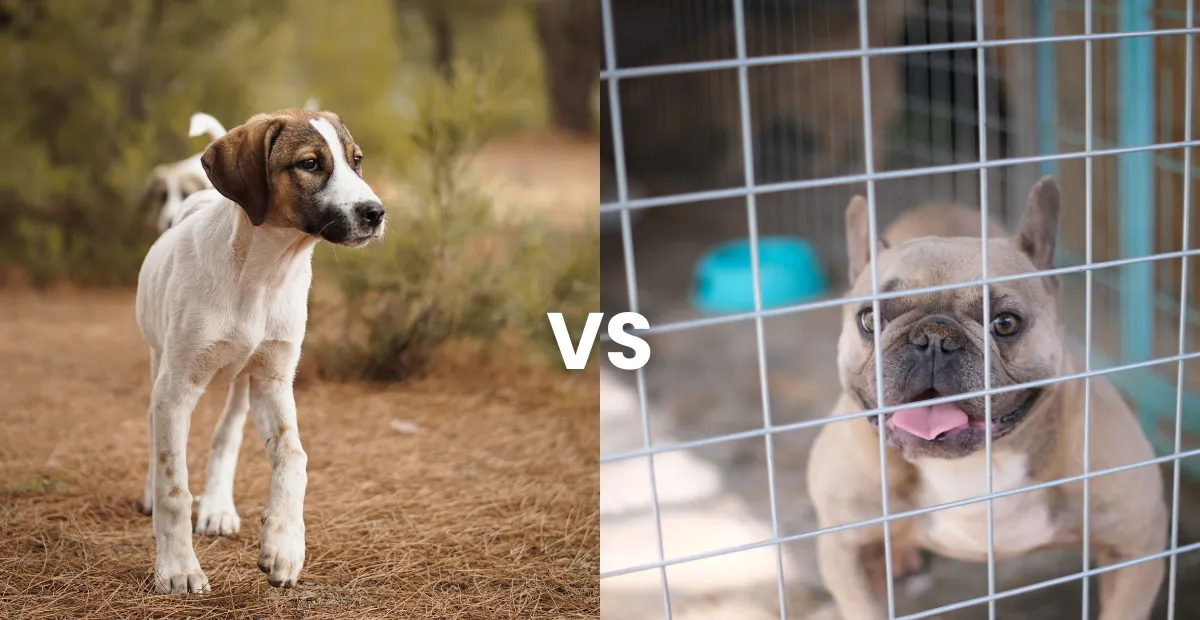
Which dogs are better off in a traditional kennel?
Dogs who are reactive, fearful of other dogs, resource guarders, or recovering from surgery are usually safer and calmer in a kennel or in-home sitter setup.
Signs cage-free boarding is not the right fit right now:
- Stiffens, growls, or snaps when another dog approaches
- Guards food, bowls, or toys
- Has a history of fights or bite incidents
- Is unspayed or unneutered and past puppy age
- Needs strict crate rest or medical isolation
A responsible cage-free facility will tell you this after a trial visit. If you hear “every dog is welcome” with no screening, that is a warning sign, not a selling point. For dogs in this group, our comparison of dog boarding vs in-home pet sitting covers the alternatives.
What are the risks of cage-free boarding, and how are they managed?
The two real risks are dog-to-dog conflict and shared illness. Both are managed through screening, group size, supervision, and vaccine requirements.
Conflict. Small, matched groups and constant staff presence are what prevent scuffles. Dogs are grouped by size and play style, and staff step in before excitement tips over into tension. With 8+ years of groups at Barkingham Place, the pattern is clear: the vast majority of issues are caught at the meet and greet, before a dog ever stays overnight.
Illness. Any place where dogs share air and space carries some risk of respiratory infection. The AVMA describes canine infectious respiratory disease complex, commonly called kennel cough, as usually mild but very contagious. That is why facilities require Bordetella alongside core vaccines, and why sick dogs are kept home.
If you want to see what happens when a dog comes back sneezing, our post on signs of fleas on dogs covers the parasite side of the same conversation.
How are dogs grouped in cage-free boarding?
Dogs are separated by size and energy level, so a 12-pound terrier is not sharing a play area with an 80-pound lab, and a bouncy adolescent is not paired with a senior who wants to nap.
This is the part of cage-free boarding that owners of small dogs ask about most, and it is fair to ask. An open-room model only works if the room is made up of dogs who belong together.
At Barkingham Place, grouping works like this:
- Small and large dogs are kept in separate groups for play and rest
- Within each size group, dogs are matched by energy level, so high-drive players run together and calmer dogs keep each other company
- Climate-controlled indoor areas are open at all times, so any dog can step away from the yard and rest on a bed when he has had enough
- The meet and greet decides the group, not the breed or age on the form
The last point matters more than it sounds. A calm 50-pound dog may do better with the smaller group, and a confident 20-pound dog may hold his own with medium dogs. Watching the dog in person is how that gets decided, which is why the meet and greet is required before any first stay.
If your dog is a puppy or a senior, see our notes on dog daycare for puppies in Austin and dog daycare for senior dogs in Austin. The same grouping logic applies to boarding.
What are the requirements for cage-free dog boarding in Austin?
Most cage-free facilities in Austin require current rabies, DHPP (distemper and parvovirus), and Bordetella vaccines, proof of spay or neuter for adult dogs, and a passed temperament assessment.
Texas law is the baseline. Under Texas Administrative Code 169.29, every dog must be vaccinated against rabies by 16 weeks of age and boosted on schedule. VCA Animal Hospitals notes that rabies, distemper, parvovirus, and Bordetella are universally required by boarding facilities.
The spay/neuter rule is specific to group settings. Intact adult dogs change the dynamic of a room, so cage-free facilities enforce it more strictly than kennels do. Our article on the benefits of neutering your dog explains the reasoning, and dog daycare requirements in Austin lists the full checklist that applies to boarding as well.
What should you check before booking cage-free boarding?
Before booking, confirm overnight staffing, group size, the screening process, and what your dog’s day will actually look like. Then do a trial visit.
Seven questions worth asking any cage-free facility in Austin:
- Is a staff member physically on site all night, every night?
- How many dogs are in a group, and how are groups matched?
- What is the screening process, and can a dog fail it?
- Where do dogs sleep, and can I see the room?
- What vaccines and spay/neuter status do you require?
- What happens if a dog gets sick or hurt at 2 a.m.?
- Will I get updates during the stay?
The AKC’s boarding guidance says a reputable facility will let you see where dogs sleep, eat, and play and will require vaccine records. If you cannot see the space, keep looking.
A trial matters as much as the questions. Our post on what a meet and greet is explains how the assessment works, and once your dog is approved, what to pack for a first boarding stay and when to book dog boarding in Austin cover the practical side. For pricing, see how much dog boarding costs in Austin or run the numbers in the boarding cost calculator.
Frequently asked questions about cage-free dog boarding in Austin
Is cage-free dog boarding safer than a kennel?
It is safer for the right dog and less safe for the wrong one. For a social, screened, vaccinated dog, a small supervised group is a calmer environment than a run. For a reactive or fearful dog, a kennel or in-home sitter removes the conflict risk entirely.
Do dogs sleep together in cage-free boarding?
Yes, in most cage-free facilities dogs sleep in shared rooms on beds and couches with a staff member on site overnight. Groups are usually smaller at night than during the day, and dogs who prefer a quiet corner are given one.
What vaccines does my dog need for cage-free boarding in Austin?
Rabies, DHPP, and Bordetella are the standard three. Texas requires rabies by 16 weeks of age, and most Austin facilities want Bordetella given at least a week or two before the stay. Bring the vet record with you.
Can an unneutered dog stay in cage-free boarding?
Usually not once the dog is past puppy age. Intact adults change how a group behaves, so most cage-free facilities, including Barkingham Place, require spay or neuter for adult dogs and make an exception only for puppies under one year.
How do I know if my dog will like cage-free boarding?
Book a meet and greet or a single daycare day first. A dog who explores the room, engages with a couple of dogs, and settles within an hour or two is a good candidate. A dog who hides, freezes, or fixates on the exit is telling you something.
How much does cage-free dog boarding cost in Austin?
Cage-free boarding in Austin generally runs $50 to $80 per night depending on the facility and holiday dates. Barkingham Place charges a flat $55 per night for adult dogs, which includes the overnight supervision and group play rather than adding them as extras.
Ready to see cage-free boarding for yourself?
The fastest way to know if cage-free is right for your dog is to bring him by. 👉 Book a meet and greet or contact us with any questions about your dog’s first stay.
Looking for trusted dog daycare or boarding in Austin? Barkingham Place has provided cage-free dog boarding and dog daycare in South Austin for over 8 years, with small groups, 24/7 on-site supervision, and photo updates so you know how your dog is doing. Call us at (737) 373-4736.
References
- Beerda et al., Chronic Stress in Dogs Subjected to Social and Spatial Restriction II, Physiology & Behavior, 1999
- Psychological Stress, Its Reduction, and Long-Term Consequences, Animals (PMC), 2020
- Canine Infectious Respiratory Disease Complex, American Veterinary Medical Association
- 25 Texas Administrative Code 169.29, Rabies Vaccination Requirement
- Boarding Your Dog, VCA Animal Hospitals
- What to Know and Look for When Boarding Your Dog, American Kennel Club