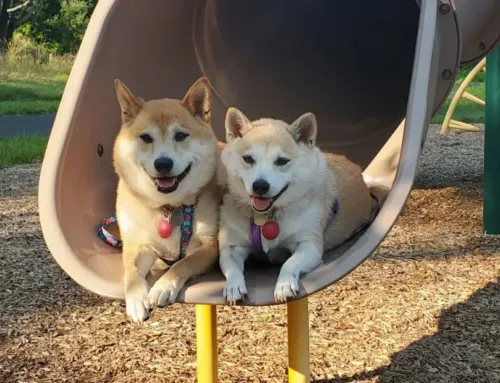

Do dogs need to be neutered for boarding? At most facilities where dogs spend the day playing together, yes, and the reasons go well beyond what most owners expect.
They come down to how a group of dogs behaves when hormones enter the room: who gets targeted, who marks, who fights, and why one female in heat can change the mood of every dog in the yard.
We have run cage-free daycare and boarding in South Austin for 8+ years, and this is one of the rules owners ask about most. Here is what it actually protects against, where the research stands, and what to do if your dog isn’t fixed yet.
The Short Answer: Is Spay or Neuter Required for Boarding?
Yes. At most boarding and daycare facilities with group play, adult dogs must be spayed or neutered. Facilities that keep dogs in individual kennel runs are more likely to accept intact dogs, because those dogs never share space.
At Barkingham Place, the requirement applies to every dog one year and older, for both dog daycare in Austin and overnight dog boarding. Puppies under one are welcome while intact.
Why Boarding Facilities Require Dogs to Be Neutered: 7 Reasons
Nearly all of them come down to one fact: an intact dog changes how every other dog in a shared space behaves.
1. Intact Males Often Become Targets
An intact male is more likely to be picked on than to start trouble. Testosterone gives him a distinct scent, and many neutered dogs respond to it with stiff posture, growling, or a fight.
This catches a lot of owners off guard. They assume the rule protects other dogs from the intact dog, when it often protects the intact dog from everyone else.
It tends to be most noticeable with adolescent males, whose hormones are surging. A friendly young dog can walk into a group and find himself surrounded, not because of anything he did, but because of what the other dogs smell.
2. A Female in Heat Unsettles the Whole Group
One female in heat can unsettle every dog around her. According to VCA Animal Hospitals, her urine carries pheromones that signal her reproductive state, and male dogs can pick up on it from a long way off.
A heat cycle usually runs about two to three weeks and comes around roughly twice a year. During that time:
- Males crowd her, compete with each other, and stop responding to cues
- She may snap at attention she doesn’t want
- Even neutered males may show interest, which adds to the tension
The signal also stays behind. Females in heat tend to urinate small amounts on objects, which leaves pheromones in the play area after she goes home. And a first heat can be so subtle that owners don’t notice it at all, so waiting to spot the signs isn’t a reliable plan.
3. Mounting Turns Into Scuffles
Mounting is one of the fastest ways a friendly play session turns into a scuffle. It is strongly influenced by sex hormones, and VCA notes that neutering often reduces mounting and marking.
The dog being mounted rarely appreciates it. A correction follows, the mounting dog pushes back, and other dogs come over to see what is happening. Supervision can interrupt it, but a dog who mounts constantly needs constant interrupting, which pulls attention away from the rest of the group.
4. Marking Matters More in a Home-Like Space
Intact males are far more likely to lift a leg indoors. In a home-like facility with dog beds, blankets, and shared rest areas, that affects everyone.
Marking is also contagious. When one dog marks a spot, others often mark over it, and a single intact male can set off a chain reaction.
In a kennel, that is one run to clean. In a shared space, it is where every dog rests.
5. The Intact Dog Is Often Stressed, Too
A group setting can be hard on an intact dog’s own nerves. Between the extra attention from other dogs and his own drive to investigate, patrol, and mark, he rarely gets to relax.
Daycare and boarding only work when a dog can switch off between play sessions. A dog on alert all day tends to go home more wound up than when he arrived, which defeats the whole point.
6. Accidental Pregnancy Is Still a Real Risk
Yes, the obvious reason is still a reason. Mating can happen in moments, faster than anyone can cross a yard, so even round-the-clock supervision can’t bring the risk to zero.
No facility wants to call a client and explain an unplanned litter. A clear rule removes that possibility entirely.
7. One Clear Standard Keeps Every Dog Safer
A single, consistent rule is easier to apply fairly than case-by-case judgment calls. Every owner knows what to expect, and every dog in the group starts on the same footing.
It also accounts for the fact that hormone-driven behavior isn’t constant. A dog who was fine last month can act very differently during adolescence or a heat cycle, and a clear line prevents those surprises.
Why Cage-Free Facilities Are Stricter Than Kennels
Kennel-style boarding can house an intact dog in his own run, away from everyone else. A cage-free facility can’t, because shared space is the whole point.
We built Barkingham Place after seeing how stressful traditional kennel environments were for dogs, so dogs here are never confined to kennels. They roam, play, and rest together in groups sorted by size and energy level, with someone here around the clock. You can read more about how cage-free dog boarding works.
That freedom only works when the group is predictable. So if you are comparing boarding options in Austin, a strict spay and neuter policy is usually a sign that dogs genuinely spend their day together, not a sign of a fussy facility.
The Honest Part: Neutering Isn’t a Behavior Fix
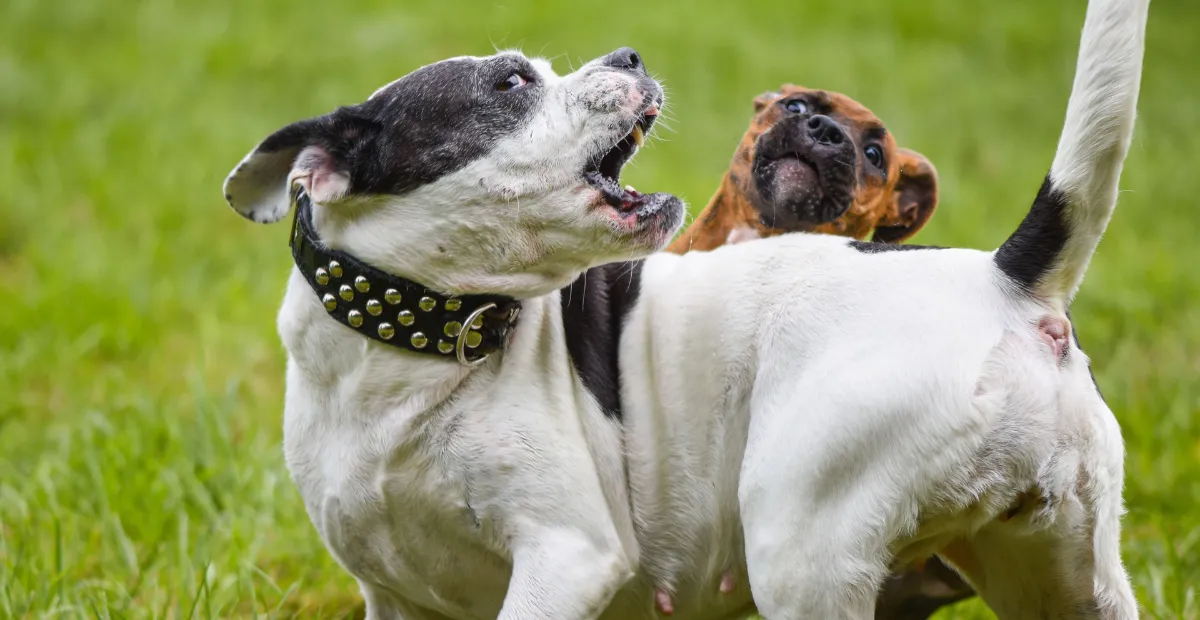
Spay and neuter requirements are about managing a group, not a verdict that intact dogs are badly behaved. The research on neutering and aggression is more mixed than most people assume.
A large study of more than 13,000 dogs published in Frontiers in Veterinary Science found no link between neutering and aggression toward familiar people or other dogs. VCA also notes that newer evidence suggests neutering can make some types of aggression worse.
What neutering does reliably change is the hormone-driven side of behavior: marking, mounting, heat cycles, and the way other dogs react to a dog’s scent. Those are exactly the things a group setting needs to control.
It won’t calm an excitable dog or fix reactivity. That takes training and time.
Timing Is a Conversation for Your Vet
The right age to spay or neuter depends on your dog’s breed and size, and many vets now recommend waiting longer for larger breeds. A UC Davis study of 35 breeds found that for some breeds, neutering in the first year was linked to higher rates of certain joint disorders and cancers, while smaller breeds showed much less risk.
That is why we never push anyone to rush surgery just to meet a daycare rule. Talk it through with your vet first. We covered the health side in more detail in our article on the benefits of neutering your dog.
Free and Low-Cost Spay and Neuter Clinics in Austin
If the cost of the surgery is holding you back, Austin has help. Austin Animal Services funds free spay and neuter surgeries for pets of City of Austin and Travis County residents through Emancipet’s free day mobile clinics. Spots are limited and first come, first served.
Just Had Your Dog Fixed? When Can They Come Back?
Your dog can return to group play once the incision has fully healed and your vet has cleared them. According to the American Kennel Club, recovery generally takes about 10 to 14 days.
A few things to know about the weeks after surgery:
- Healing comes first. Running, wrestling, and jumping can reopen an incision, so group play waits until your vet says it’s safe.
- Hormones fade gradually. Testosterone takes several weeks to clear, so marking and mounting may not drop right away.
- Fertility lingers. A newly neutered male can still get a female pregnant for up to about six weeks after surgery.
At Barkingham Place, let us know the surgery date and we will confirm when your dog can come back. If a trip is coming up, schedule the procedure well ahead of it. Our guide on when to book dog boarding in Austin helps with the timing.
Puppies and the Under-One Exception
At Barkingham Place, puppies under one year old can attend daycare and boarding without being spayed or neutered. The requirement starts at their first birthday.
Many puppies simply aren’t ready for surgery yet, and vets increasingly tailor the timing to breed and size. Female puppies can have their first heat around six months, especially smaller breeds, so watch for swelling, spotting, or more frequent peeing.
If your female puppy goes into heat, she can still come. We keep her separate from the group while she is in heat, so please tell us as soon as you notice the signs. For more on what a young dog’s day looks like, see our guide to dog daycare for puppies in Austin.
What If My Dog Is Over One and Not Fixed Yet?
Bring it up at your Meet & Greet. Situations like a vet recommending a later surgery for a large breed do come up, and it is better to talk them through upfront than to guess.
The same goes for hormone-sparing procedures like a vasectomy or an ovary-sparing spay. These prevent pregnancy but leave the hormones in place, so they don’t change most of the behaviors in this article. Ask us about your specific situation.
And if your dog will stay intact long term, that is your call to make. A facility where dogs play together may not be the best fit, and in-home pet sitting or other boarding setups can work better for some dogs.
Barkingham Place Spay and Neuter Policy at a Glance
Here is the full policy in one place. It applies to both daycare and boarding.
- Dogs one year and older must be spayed or neutered
- Puppies under one are welcome while intact
- Female puppies in heat can attend and are kept separate from the group while in heat
- After surgery, dogs can return once the incision has healed and their vet has cleared them
- Dogs over one who aren’t fixed yet, or who had a hormone-sparing procedure, should talk to us at the Meet & Greet
- Every dog also needs current Rabies, Bordetella, and DHPP vaccines (titer tests and medical exemptions accepted)
- Every new dog completes a Meet & Greet before the first visit
For the full checklist, see our guide to dog daycare requirements in Austin.
Frequently Asked Questions
Do dogs need to be neutered for daycare?
At most daycares with group play, yes. Adult dogs are usually required to be spayed or neutered because intact dogs change how a group behaves, from marking and mounting to tension between males. At Barkingham Place, the rule applies from one year of age, and puppies under one can attend while intact.
Why can’t a friendly intact dog join group play?
Because the problem is often how other dogs react to him, not how he behaves. Intact males carry a testosterone scent that many neutered dogs respond to with tension or aggression. Even a gentle intact dog can end up in the middle of a conflict he didn’t start.
How long after neutering can my dog go back to daycare or boarding?
Most dogs need about 10 to 14 days for the incision to heal, and they should return to group play only once their vet clears them. Hormone-driven behaviors like marking can take several more weeks to fade. At Barkingham Place, share the surgery date and we will confirm timing with you.
Can a female dog in heat go to daycare or boarding?
Most group-play facilities keep females in heat out of the group, because her pheromones affect every dog around her. At Barkingham Place, adult dogs must be spayed. Female puppies under one who go into heat can still attend but are kept separate from the group while in heat.
Does neutering make a dog less aggressive?
Not reliably. A study of more than 13,000 dogs found no link between neutering and aggression toward familiar people or other dogs. Neutering does tend to reduce hormone-driven behaviors like marking and mounting, which is why group facilities require it.
Do puppies need to be spayed or neutered for boarding?
Not at Barkingham Place. Puppies under one year old can board and attend daycare while intact, as long as their vaccinations are complete. The spay and neuter requirement starts at their first birthday.
Ready to Book? Start With a Meet & Greet
If your dog is fixed, or still a puppy, the next step is a short, no-commitment Meet & Greet. We go over vaccination records and your dog’s history, then let them explore the space at their own pace. Here is what to expect at a Meet & Greet.
👉 Book your Meet & Greet or call (737) 373-4736.
Looking for trusted dog daycare or boarding in Austin? Barkingham Place has cared for dogs in South Austin for 8+ years in a cage-free, home-like environment with 24/7 supervision, play groups sorted by size and energy, and at least two photo updates every day. We hold a 4.9 Google rating, and 9 out of 10 clients come back. Learn more about our dog daycare and dog boarding services, or contact us to schedule a Meet & Greet.
References
- VCA Animal Hospitals: Estrous Cycles in Dogs
- VCA Animal Hospitals: Estrus and Mating in Dogs
- Cornell Riney Canine Health Center: Dog Estrous Cycles
- VCA Animal Hospitals: Dog Neutering and Behavior
- Farhoody et al. (2018), Aggression toward Familiar People, Strangers, and Conspecifics in Gonadectomized and Intact Dogs, Frontiers in Veterinary Science
- UC Davis: When Should You Neuter Your Dog to Avoid Health Risks?
- Hart et al. (2020), Assisting Decision-Making on Age of Neutering for 35 Breeds of Dogs, Frontiers in Veterinary Science
- Hart et al. (2020), Assisting Decision-Making on Age of Neutering for Mixed Breed Dogs of Five Weight Categories, Frontiers in Veterinary Science
- American Kennel Club: Dog Spay and Neuter Recovery
- Zoetis Petcare: What to Expect After Your Pet Is Spayed or Neutered
- Vet Help Direct: Can Neutered Dogs Still Mate?
- Austin Animal Services: Free and Low-Cost Services
- Emancipet: Austin Mobile Clinic