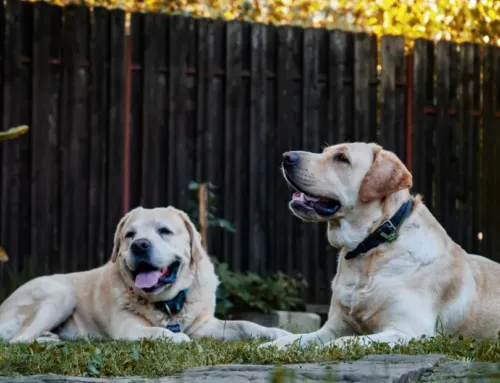

If you’re picturing a typical day at dog daycare, you’re probably imagining set play times, groups rotating in and out of the yard, and crate breaks in between. That’s how a lot of facilities run, but at Barkingham Place in South Austin, the day works differently.
Quick Answer: What Does a Typical Day Look Like at Barkingham Place, a Dog Daycare and Boarding Facility in South Austin?
At Barkingham Place, a typical day at dog daycare has no fixed play schedule. Larger dogs move freely through a dog door between an open play yard and a climate-controlled indoor lounge, deciding when to play and when to rest. Small dogs have their own separate indoor and outdoor areas, and the only set points in the day are mealtimes.
What a Typical Day at Dog Daycare Looks Like, From Drop-Off to Pickup
The day has a few fixed points (drop-off, meals, and pickup), and everything in between is up to the dogs. Here’s how a day of dog daycare in South Austin usually unfolds:
- Drop-off starts at 7:00am, and dogs join the group right away instead of waiting for a play slot.
- Dogs come and go through the dog door as they please, whether that means running in the yard or stretching out on the couch inside.
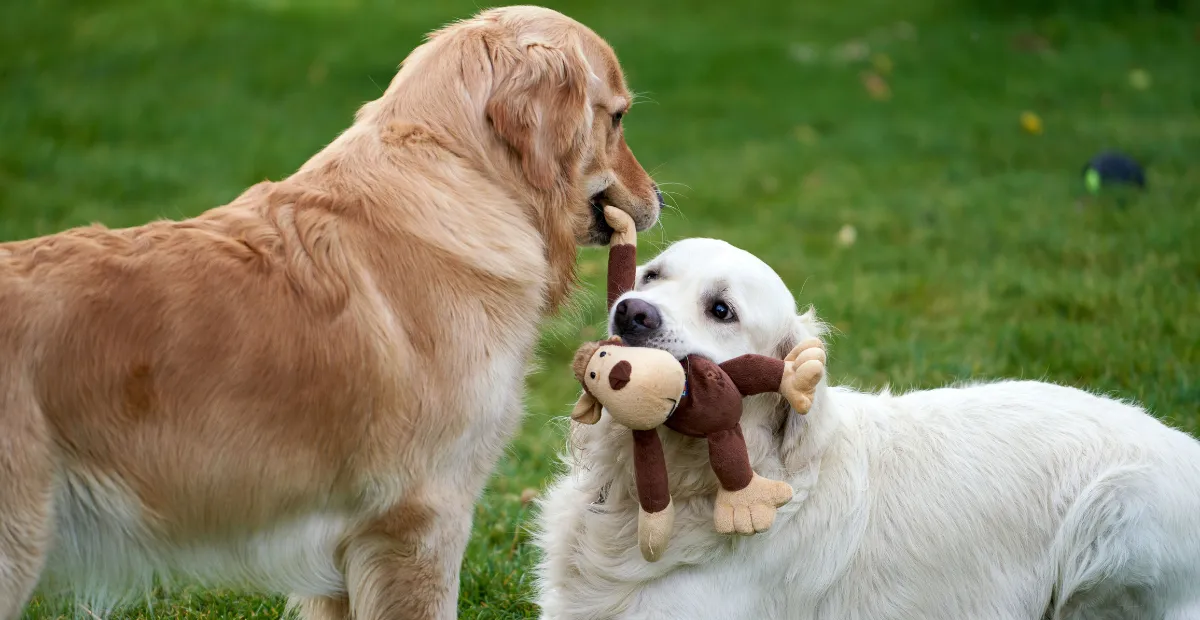
- A big part of the day is simply playtime. With plenty of room to run and the freedom to head indoors or out whenever they like, playful dogs spend hours chasing, exploring, and having a great time together.
- Meals are served at 7:30am and 4:30pm, and for daycare dogs the timing flexes around how long they’re with us. Dogs eat separately, usually in individual crates, so nobody competes over food. Outside of mealtimes, there are no crates.
- Photo updates go out at least twice a day, and often more.
- Pickup is any time before 6:30pm.
Someone is always here, so a day without a schedule never means a day without supervision.
How Do New Dogs Learn to Use the Dog Door?
Most dogs pick it up on their own by watching the other dogs, with very little training needed.
“They see the others and follow,” says Grant, who founded Barkingham Place and has run it for more than 8 years. A 2024 study in BMC Biology found something similar: dogs from more independent breeds got noticeably better at getting around an obstacle after watching another dog do it first.
How Is the Day Different for Small Dogs?
We group dogs by size and energy level, which means small dogs spend the day in their own separate indoor and outdoor areas, away from the larger dogs. They don’t use the dog door, so we move them between their two spaces throughout the day.
Most of our guests are larger dogs, so the small-dog group is usually just one to three dogs, which keeps their space quiet and uncrowded.
Why Is There No Set Schedule?
Because the space is built so dogs can decide for themselves, instead of waiting for their group’s turn in the yard.
At many larger daycares and kennels, the day runs on a rotation: one group goes out for a set block of time, then heads back to crates or runs while the next group takes its turn. That’s the model Grant set out to avoid when he started Barkingham Place, after seeing firsthand how stressful traditional kennel environments could be for dogs.
Research on kennelled dogs backs up that concern, linking kennel admission with acute stress and pointing to social housing as one way to improve their welfare.
“There’s not really a flow to the day, so to speak,” Grant explains. “The dogs kind of choose their own adventure, whether they want to be out in the yard playing or relaxing inside.”
The Benefits of Letting Dogs Choose Their Own Day
Each dog gets to pace their own day, playing when they have energy and resting when they don’t. A 2024 scoping review of animal welfare studies across zoo, farm, and lab settings found that giving animals choices, such as access to different areas, improved welfare indicators in most of the studies it covered.
Here’s what that looks like day to day:
- Rest happens naturally. Adult dogs can sleep 12 to 14 hours a day, according to the American Kennel Club, and a tired dog here can simply walk inside and lie down.
- Energy levels sort themselves out. High-energy dogs tend to stay outside playing while calmer dogs drift indoors.
- Nobody is pushed into play. No dog gets sent out to the yard on a timer.
- There’s an easy escape from the heat. The indoor lounge is climate-controlled, which matters during a long Austin summer.
The fixed points still give dogs a consistent routine, and we’ve noticed that dogs who arrive with restless energy often settle into a calmer rhythm after regular daycare.
What If My Dog Would Rather Lounge Than Play?
That’s completely fine. Dogs who prefer to relax can spend most of the day on the couch inside, or lie in the yard and watch the others play.
We recently heard from an owner whose older dog prefers watching to joining in, and that’s exactly the kind of dog this setup suits. Older dogs often need more rest, and if yours takes routine medications, we can give those with clear instructions. Our guide to dog daycare for senior dogs in Austin covers more.
Do You Accept Households With Multiple Dogs?
Yes. Dogs from the same household are welcome for both daycare and boarding, and arriving with a familiar companion can make a new place feel a little less new.
Each dog completes the Meet & Greet and meets the same dog daycare requirements, including up-to-date vaccinations. At mealtimes, siblings eat separately like everyone else, since feeding dogs in separate spaces helps prevent food guarding, even between dogs who get along at home.
Is This Setup Right for Every Dog?
Not every dog, and that’s okay. It works best for dogs who are comfortable around other dogs and enjoy having room to move.
A dog who gets anxious in groups may be happier with in-home pet sitting, and our guide to choosing the right doggy daycare in Austin walks through what to look for. The Meet & Greet, a short, no-commitment visit, is how we make sure it’s a good fit before your dog’s first day.
Frequently Asked Questions About a Typical Day at Dog Daycare
Are dogs crated at Barkingham Place?
Only at mealtimes, when dogs eat separately, usually in individual crates. The rest of the day, larger dogs move freely between the yard and the indoor lounge, and small dogs have their own separate areas.
What time are dogs fed at daycare?
Meals are served at 7:30am and 4:30pm, and for daycare dogs the timing flexes around how long they’re with us that day. Dietary restrictions and allergies can be accommodated.
How are small and large dogs kept separate?
Small dogs have their own indoor and outdoor areas, completely separate from the larger dogs. Instead of using the dog door, they’re moved between their two spaces throughout the day.
Where do dogs sleep during overnight boarding?
All dogs sleep indoors overnight, with bedding and fresh water provided, and someone is here through the night. Learn more about dog boarding in South Austin and what to pack for a first boarding stay.
Will I get updates during the day?
Yes. Every dog gets photo updates at least twice a day, and often more, so you can see whether your dog spent the day playing in the yard or napping inside.
Come See a Typical Day for Yourself
The best way to understand how the day works is to see it in person.
👉 Book a Meet & Greet to bring your dog by for a short, no-commitment visit, or contact us with any questions. You can also call (737) 373-4736 if you have any questions.
Looking for trusted dog daycare or boarding in Austin? Barkingham Place has cared for dogs in South Austin for more than 8 years, with 24/7 human supervision, a 4.9 Google rating, and 9 out of 10 clients coming back. We’re open every day from 7:00 am to 8:00 pm at 708 Buckingham Pl, serving dog owners across South Austin area, including Garrison Park, South Congress (SoCo), and South Park Meadows. Explore our doggy daycare in Austin and overnight dog boarding to learn more.
References
- Evaluating pair versus solitary housing in kennelled domestic dogs using behaviour and hair cortisol: a pilot study, PubMed Central
- The voice of choice: A scoping review of choice-based animal welfare studies, Rust, Clegg & Fernandez (2024), University of Adelaide
- Choice, control, and animal welfare: definitions and essential inquiries to advance animal welfare science, Frontiers in Veterinary Science (2023)
- Independent, but still observant: dog breeds selected for functional independence learn better from a conspecific demonstrator than cooperative breeds in a detour task, BMC Biology (2024)
- Too Much Sleep: Is There Such a Thing for Senior Dogs?, American Kennel Club
- How to Feed Two Dogs at Once, Purina