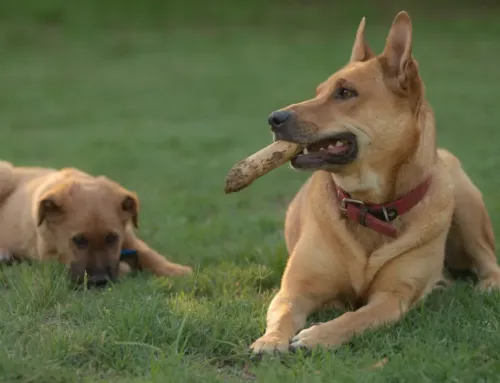

Dog behavior after boarding often looks a little off for a day or two. In most cases, your dog is simply decompressing after a busy, unfamiliar few days, not reacting to something that went wrong.
Extra sleep, a big drink of water, a softer stomach, or a dog who follows you from room to room are all common after a stay. Knowing which changes are normal, and how long they should last, makes it much easier to spot the rare one that isn’t.
After 8+ years of running cage-free daycare and boarding in South Austin, we put this guide together for the moment you get home with your dog, especially after a long holiday stay.
Why Do Dogs Act Differently After Boarding?
Dogs act differently after boarding because a stay changes almost everything at once: their surroundings, their routine, the sounds around them, and how much they play. Coming home is one more change, so a short readjustment period is expected.
Dr. Erin Ray, a veterinarian at Texas A&M’s College of Veterinary Medicine, explains that pets commonly go through a brief readjustment after boarding. They may want extra attention, sleep more, or need about a day to settle back into their routine.
Even dogs who enjoyed every minute of their stay can come home tired. A few days of play, new smells, and new faces is a lot to take in, even when it’s fun.
6 Normal Changes After Boarding (and How Long They Last)
Most changes in dog behavior after boarding fade within a day or two, while a stress-related upset stomach can take up to five days to clear. Here’s what each change looks like and when it stops being normal.
1. Sleeping a Lot
Sleeping more than usual for a day or two is one of the most normal things a dog does after boarding. It’s rest, not a warning sign.
According to VCA Animal Hospitals, many dogs sleep almost nonstop for a day or two after coming home. Being back in a calm, familiar space after an exciting stay is usually the reason.
Let your dog sleep. A dog who wakes up for meals and a short walk, then goes back to napping, is simply recharging.
2. Drinking More Water
Drinking more than usual on the first evening home is common and usually comes from exertion and excitement. Dogs cool off mostly by panting, so a busy day and an exciting pickup can leave them thirsty.
Keep fresh water available. If your dog gulps a full bowl in one go, offer smaller refills over the next hour instead.
If heavy drinking continues for several days, especially with more trips outside to pee, mention it to your vet. Ongoing increased thirst can be a sign of a medical issue that has nothing to do with boarding.
3. Eating Less (or Eating Too Fast)
Appetite often shifts for a day after boarding. Some dogs skip a meal, while others act like they haven’t eaten in a week.
A change in routine can easily put a dog off their food for a meal or two, and coming home is a change too. Most dogs are back to their normal appetite within a day.
For large, deep-chested dogs, go easy on that first dinner. Cornell’s Riney Canine Health Center lists eating too quickly, large meals, and exercise soon after eating among the risk factors for bloat, a life-threatening stomach condition. Serve a normal or slightly smaller portion, and skip rough play right after.
If your dog refuses food for more than 24 hours, or stops eating and is also vomiting or lethargic, PetMD advises contacting your veterinarian.
4. Soft Stool or Mild Diarrhea
Mild, loose stool for a few days after boarding is common and is usually linked to stress. Vets call this stress colitis.
VCA’s guide to colitis in dogs describes stress colitis as one of the leading causes of large bowel diarrhea in dogs, and most dogs with it are back to normal within three to five days.
Keeping your dog on the same food before, during, and after the stay helps, since sudden diet changes can upset digestion. If a stay is coming up, our guide to what to pack for your dog’s first boarding stay walks through the essentials.
Call your vet if loose stool lasts longer than a few days, turns watery, or comes with vomiting, lethargy, or refusing food.
5. Clingy, or a Little Distant
Many dogs want extra attention after boarding and follow you from room to room for the first day or two. A few go the other way and seem a bit aloof for a few hours before warming back up.
Both usually fade as your normal routine returns. Give your dog attention when they ask for it, but keep hellos and goodbyes calm and low-key.
Clinginess that turns into panic every time you leave, like howling, scratching at doors, or accidents, is a different issue. Our guide to dog separation anxiety and what actually helps is a good place to start.
6. Off Schedule for a Day
Expect potty times, nap times, and bedtime to be a little off for a day or so. Your dog is syncing back up with your household’s rhythm.
Some dogs are restless the first night home or need an extra trip outside. Going straight back to your usual feeding and walk times is the fastest fix, and it’s one reason a consistent routine matters so much for your dog’s mental health.
Quick Reference: What’s Normal vs. When to Call Your Vet
Use this table during your dog’s first few days home. The middle column is normal readjustment, and the right column is your cue to call the vet.
| Change | Usually normal if... | Call your vet if... |
|---|---|---|
| Sleeping a lot | It lasts a day or two and your dog still wakes for meals and walks | Your dog is weak, hard to rouse, or still lethargic after two days |
| Drinking more water | It's mostly the first evening home | Heavy drinking continues for several days, especially with more peeing |
| Eating less | Your dog skips a meal and eats normally within a day | No food for more than 24 hours, or not eating plus vomiting or lethargy |
| Soft stool | It's mild and improving within 3 to 5 days | It lasts longer, turns watery, or comes with vomiting or lethargy |
| Clingy or distant | It fades over the first few days | Your dog panics when you leave or seems like a different dog |
| Off schedule | Your dog is back to their usual routine within a day or two | Accidents or restlessness keep going past the first few days |
When Is It Not Normal? Signs to Call Your Vet
Call your vet if any change is severe, lasts more than a few days, or shows up alongside other symptoms like vomiting, lethargy, or refusing food. That’s the line between normal readjustment and something that needs a professional look.
Dr. Ray’s advice for owners is simple: “Listen to your gut.” If something feels wrong with your dog, a phone call to your vet is always reasonable.
Call your vet if you notice:
- Vomiting or diarrhea that is severe or lasts more than a few days
- No appetite for more than 24 hours
- Lethargy or weakness that doesn’t improve after a day or two of rest
- Heavy drinking and peeing that continues for several days
- A major change in behavior that doesn’t fade
Emergency Signs of Bloat in Large Dogs
Go to an emergency vet right away if your dog tries to vomit but brings nothing up, has a swollen or painful belly, drools heavily, paces restlessly, or has pale gums. These are signs of bloat (GDV), which Cornell notes requires immediate medical and surgical care.
Bloat isn’t caused by boarding. But large, deep-chested breeds are most at risk, and a big, fast meal followed by excited play is exactly the combination to avoid on the first night home.
How to Help Your Dog Settle Back In at Home
Keep the first 24 to 48 hours quiet and predictable: their usual food, their usual schedule, plenty of rest, and no big outings. Most dogs bounce back fastest when home feels like home again.
- Let them sleep, and skip the dog park or long hikes for a day or two
- Feed their regular food at regular times, with a normal or slightly smaller first dinner for big dogs
- Keep fresh water out, and offer smaller refills if your dog gulps
- Give them calm time after meals instead of play
- Go back to your usual walk and bedtime routine right away
- Watch appetite, stool, and energy for a few days, and note anything you’d want to tell your vet
How We Make Boarding Easier on Dogs at Barkingham Place
The easiest homecoming starts with a stay that doesn’t feel like a total disruption. That’s why Grant built Barkingham Place as a home-like, cage-free space after seeing how stressful traditional kennel environments were for dogs.
Here’s what a stay with us looks like:
- Dogs aren’t confined to kennels. They move, play, and rest in a home-like setting, grouped by size and energy level. Our guide to cage-free dog boarding explains why that matters.
- Climate-controlled indoor areas with dog beds give dogs a comfortable place to rest and cool off.
- You’re welcome to bring your dog’s own food, plus a blanket or toy from home. We provide bedding and fresh water.
- Someone is here 24/7, including overnight.
- You get daily photo updates, at least two per day, so you can see how your dog is doing before pickup.
Texas A&M’s Dr. Ray also suggests bringing familiar items from home, like a favorite toy or something that smells like you, to help a pet adjust. You can learn more about dog boarding in South Austin and what each stay includes.
None of this means your dog won’t nap the whole evening after pickup. A tired dog after a good stay is completely normal.
What If Your Dog Has a Hard Time After Every Stay?
If your dog struggles after every stay, start with a conversation with your vet, then take a fresh look at the type of care. Some dogs simply do better with a gentler setup.
Dr. Ray recommends talking to your vet before boarding, especially if your dog is older, medically fragile, or highly anxious, and choosing a place that fits your dog’s personality. A few other things can help:
- A Meet & Greet before the first stay, so the space isn’t brand new on drop-off day
- A shorter first stay before a long trip
- Using the same place each time, so it becomes familiar
And if boarding just isn’t the right fit for your dog, that’s okay. Our comparison of dog boarding vs. in-home pet sitting walks through when a sitter at home is the better choice.
Frequently Asked Questions About Dog Behavior After Boarding
How long does it take a dog to adjust after boarding?
Most dogs settle back in within a day or two. Sleep and routine usually return first, while a stress-related upset stomach can take three to five days to clear. If changes last longer than that, check in with your vet.
Why is my dog so tired after boarding?
Dogs are often tired after boarding because they’ve had days of extra play, new smells, and a new routine. Many dogs sleep almost nonstop for a day or two once they’re back in a calm home. If your dog seems weak or is still lethargic after two days, call your vet.
Is it normal for a dog to have diarrhea after boarding?
Mild diarrhea after boarding is common and is often caused by stress colitis. Most dogs with stress colitis are back to normal within three to five days. Call your vet if it’s severe, lasts longer, or comes with vomiting, lethargy, or refusing food.
Why is my dog drinking so much water after boarding?
Extra drinking on the first evening home usually comes from exertion, panting, and excitement. Keep fresh water available, and offer smaller refills if your dog gulps. If heavy drinking continues for several days, especially with more peeing, see your vet.
Why is my dog clingy after boarding?
Wanting extra attention after boarding is a normal part of readjusting, and it usually fades within a few days as your routine returns. If your dog panics every time you leave, that may point to separation anxiety, and it’s worth raising with your vet.
Should I take my dog to the vet after boarding?
Not unless something seems off. Most changes after boarding are normal and short-lived. Call your vet if a change is severe, lasts more than a few days, or comes with vomiting, lethargy, or refusing food.
Planning Your Dog’s Next Stay?
If your dog’s next stay is coming up, especially over the holidays, booking early gives you the most options. Our guide on when to book dog boarding in Austin covers holiday timing.
New to Barkingham Place? Start with a Meet & Greet, a short, no-commitment visit where your dog can explore the space before their first stay.
👉 Call us at (737) 373-4736 or contact us to check availability.
Looking for trusted dog daycare or boarding in Austin? Barkingham Place has cared for dogs in South Austin for 8+ years in a cage-free, home-like environment with 24/7 supervision, size-matched play groups, and daily photo updates. Learn more about our dog daycare and dog boarding services, or call (737) 373-4736 to schedule a Meet & Greet.
References
- Planning Ahead: Reducing Stress When Boarding Your Pet, Texas A&M College of Veterinary Medicine & Biomedical Sciences
- Dog Boarding, VCA Animal Hospitals
- Colitis in Dogs, VCA Animal Hospitals
- Gastric Dilatation Volvulus (GDV) or “Bloat”, Cornell Richard P. Riney Canine Health Center
- Dog Not Eating? Causes and When To Call Your Vet, PetMD
- Why Is My Dog Drinking a Lot of Water?, Dogster